
On the outskirts of Ulverston there is a small village by the name of Newland, it is a quaint little place with some lovely cottages surrounded by fields, a typical country village. But at the heart of the village is something with a much more industrial past, Newland Furnace!
 This remnant of the areas industrial past was built in 1747 as a charcoal fired and water powered iron furnace. Charcoal was used as the fuel to create the fire and heat needed to melt the iron ore while the water would power a large water wheel which operated large bellows. These bellows would be brought up to let air into them then pushed down to release the air through a small exit into the bottom of the furnace. This would feed the fire with oxegen to get it hotter and hotter.
 During its working life the furnace was producing 28 tonnes of iron each week, an incredible amount, and to produce that amount it required an even greater amount of charcoal. 56 tonnes to be precise. This meant they required a large barn to store the charcoal and you can see this in the picture to the right. This is always the interesting thing about these industrial sites, they often supported other industries in the area. Here they would have been a life line for the local charcoal burning industry, such large quantities being required each week would have provided healthy work for the men in the woods with their burns. It does make you wonder how fruitful that charcoal industry was once these types of furnace closed.
Newland was owned by Richard Ford but had been bought on his behalf by his sister Agnes Bordley. In 1735 Ford had entered an agreement with a Thomas Rigg who owned and ran Nibthwaite furnace alongside Ford. The agreement was that neither could set up a new furnace within 10 miles of Nibthwaite, unfortunately Newland was within 10 miles. Due to this Ford had his sister purchase the site on his behalf, this meant he had not broken the agreement and could open his own furnace, which he did, and the rest is history!
The furnace was once one of eight of its kind in this area smelting iron using charcoal. Something which in later years became obsolite with the rapid use of coke, which produced a much higher heat at quicker rates. This meant that many charcoal firing furnaces either shut down or converted to coke. Newland Furnace however managed to keep operating with charcoal for almost a century after many others had converted or closed. Sadly though in 1891 Newland shut for good and became a relic of a past age of charcoal iron smelting.
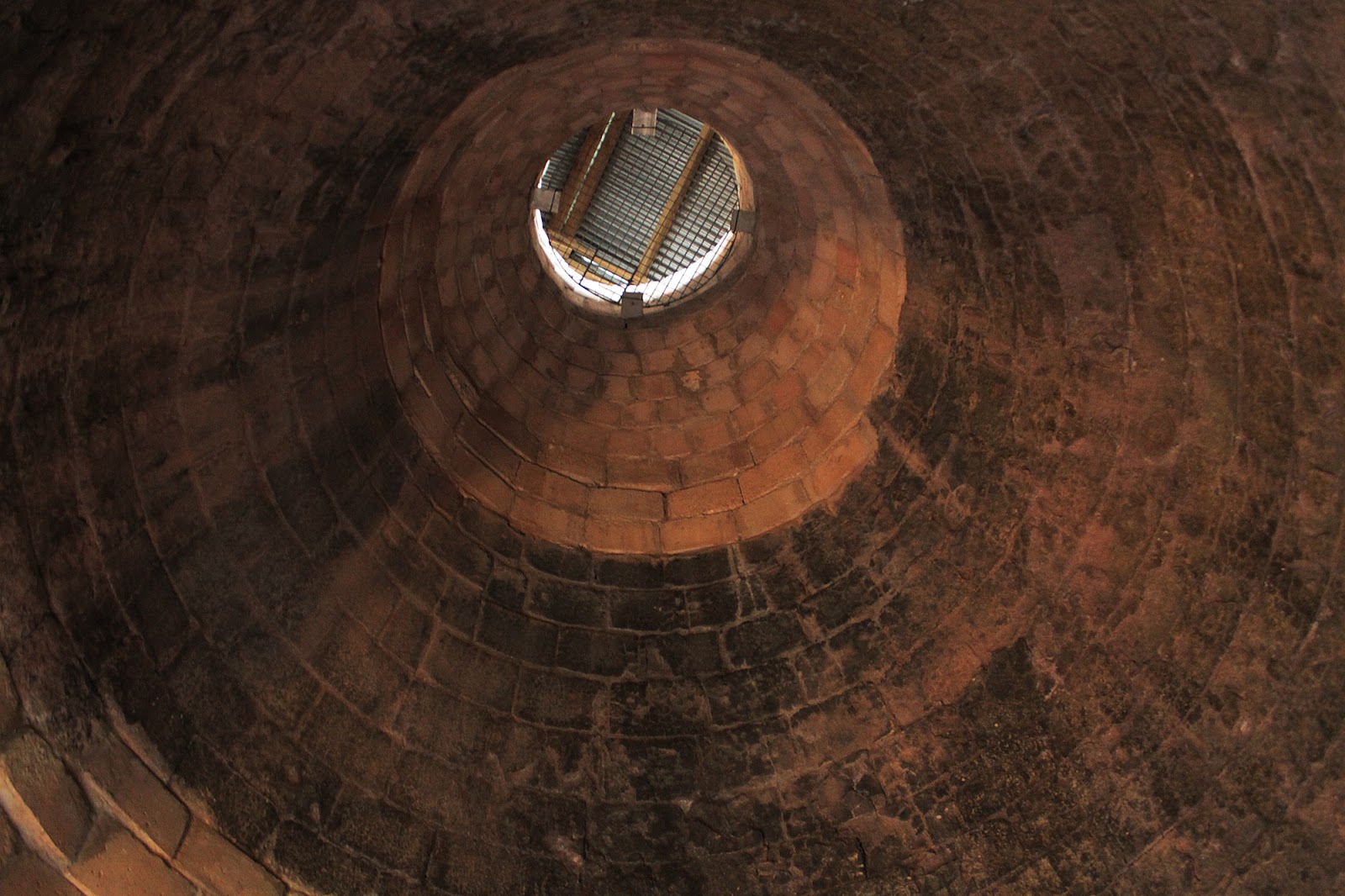 By the mid 1980s much of the site was un-used and quite a state when a selection of people were brought in to make the building safe. Many of these people took great interest in the site and decided, in 1998, to set up a trust to renovate the building, this was the start of the Newland Furnace Trust. Since then they have rebuilt the top of the furnace chamber, excavated the interior of the blowing chamber, re-boarded the floor of the large top room and generally looked after and renovated the site. In the image here you can see the inside of the furnace chamber and the clear line where the new bricks have been added ontop of the old ones. The old being blackened from the many years of charcoal fires raging around them. The work the group have done has been amazing and shows a real love for the furnace and will stand it in good stead to last well into the future.
The site is accessible from the outside and there are a few information boards to help you better under stand the building. On certain occasions the furnace does open on days like the Heritage Open Days for everyone to see inside, speak to members of the trust and learn more about this facinating building, so do keep an eye out!


Do come back on the 22nd when, instead of taking a look at one site, we will be looking at the whole of the Furness area in the Viking Age!


