Pages

Showing posts with label Cumbria. Show all posts

Friday, 28 June 2019

A church with a Norman origin - St. Cuthbert's Church, Kirkby

Heading up the west coast of the Furness Peninsula you will find the lovely little village of Kirkby-in-Furness and with it the church of St. Cuthbert.


St. Cuthbert's church is a typically quaint village church that stands just off the wonderfully named Lady Moyra Incline.

The origin of this church can be dated back to the Norman period of British history. The town of Kirkby is mentioned in the Doomesday book of 1086 with the name Cherchebei. This meant 'Village by the Church' which strongly suggests that there must have been a church here at this time. When exactly a church was first established here though is unknown.

Inside the church there are two chests made of oak, which are believed to date to an earlier Saxon church. The tree rings found on the wood have been dated to the Saxon period and this certainly gives substance to the theory. Whether they are from an earlier church on this site though or whether they were simple brought to the church from elsewhere we may never know.

The current church building is a mix of various stages of construction and restoration, as one would expect from a church of its age. The entrance doorway is a fine example of a Norman arch, which is believed to date to the 1150s. The use of lovely red sandstone for the arch making it stand out from the grey stone surrounding. Certainly an impressive entrance.

The main body of the church that stands today is thought to have been constructed under the orders of Sir Rodger de Kirkby sometime in the 15th Century. The de Kirkby family had been the lords of the manor in this area for many hundreds of years.

The tower of the present church, sadly, is not the original. In 1657 the church bells were being rung for the Sunday service when disaster struck. The tower gave way and fell to the ground damaging all but one of the bells inside. It must have been awful when this happened and I do hope the bell ringers made it out alive and unscathed.

During this incident two of the three bells that hung within the tower were damage beyond repair.

Many of the church windows, as well as much of the buildings interior, were restored or replaced in the 1800s, leaving the church in the state we see it today.

This lovely church is full of character and is a wonderful addition to the catalogue of churches found across Furness. If you are ever in the Kirkby area, do go and have a look.


The Churches of Furness Series does what it says on the tin, it takes a look at the many and varied churches of the Furness area of South Cumbria. From churches with Norman origins to Victorian houses of worship there certainly is an array of religious buildings here! 


Tuesday, 26 March 2019

A Coastal Church with a Rich History - St. Cuthbert's Church, Aldingham

Perched beside the gravel beach on the east coast of the Furness Peninsula is the rather lovely Aldingham Church.


Aldingham Church, or St. Cuthbert's to give it it's proper title, has quite a long history with parts of the church dating back to the 1150s (the Norman period).

On entering the church you are first struck by the large arches that run on either side of the Nave. Both sides are built in different styles to match the period they were built. The right hand range is built in the later Gothic style with the left being the more ancient Norman design, with its semi-circular arches. These are remnants of the original Norman church, most likely constructed under the order of Michael Le Fleming who was lord of the manor. It was Michael's son, Daniel, who became the churches first rector in 1180.


The present church has been extended and altered several times over it's life. In the 13th Century the chancel was extended to form it's present state. A large arch providing entrance from the nave. Interestingly this archway is off to one side. This was done intentionally to represent Jesus with his head leaning, one presumes during Crucifixion.

It is worth taking a closer look at this arch also as at the base of each side are some wonderful medieval carvings of a woman and man.

Moving into the chancel there is another interesting feature. Off to the right behind the alter there is a small hole in the wall that reveals the outside. Is this some damage yet to be repaired? Well, no. It is in fact something that was placed here entirely on purpose.

This small gap is known as a leper's hole or squint. It was created so that people with the illness could see into the church and watch a service without entering the holy building. In the middle ages they believed that leprosy was highly contagious so went to great measures to ensure that anyone suffering with the disease was kept at a safe distance. Holes like this could also be used to pass communion bread to those outside.


The church tower here at Aldingham was added in the 1300s and much restoration has taken place within the church since to leave it how it looks today.

You may be wondering about the name of the church - St. Cuthbert's. Why is it named after a Saint who predominantly lived in the North East in Anglo-Saxon times? Well, this could be because the relics of St. Cuthbert (his body) were rested in Aldingham when the monks from Lindisfarne were fleeing from the Danes in the East sometime in the late 800s AD. An inscription in Durham Cathedral mentions Aldingham alongside other areas where the Saint was rested.

With such an important person's body having rested in the village it is little wonder that the church was dedicated to him. There may well have been an Anglo-Saxon church here at the time (a worn section of an Anglo-Saxon cross can be found in the walls of the church which may give evidence to this) which could originally have taken up the name.

This church is a great place to visit with a wonderfully layered history. There is lots to discover, more than I have mentioned in this post, so why not pop along for a look and even enjoy a wander along the beach that runs beside the church yard..


The Churches of Furness Series does what it says on the tin, it takes a look at the many and varied churches of the Furness area of South Cumbria. From churches with Norman origins to Victorian houses of worship there certainly is an array of religious buildings to discover! 


Tuesday, 12 March 2019

Lost Railway at Greenodd | Snapshot Series

The small village of Greenodd, just off the A590 on the way in or out of Furness, today is a quite place with a few local amenities among the houses. Back in the 1800s though the sound of steam trains would have been heard regularly puffing by the village.


It might be hard to tell now but Greenodd once had a busy railway line running alongside it, as well as it's own station.

The line was opened in 1869 as part of the new Furness Railway, which was connecting much of Furness with Lakeside for the easy transport of goods.

The train line would have had many trains with industrial cargo hammering though but there was also a passenger train, which people could board from the station. This station once stood near the end of current Main Street with the railway running where part of the A590 now sits.

There isn't much evidence of the long lost train line but it’s nice to know that one once ran here.

Greenodd Station, image courtesy of NW Evening Mail.


The Snapshot Series is a series of short posts on singular locations, features or artefacts found in the Furness area. Not large enough to warrant a long blog post we will explore these sites in snapshots!


Tuesday, 19 February 2019

Wordsworth in Furness

Furness has often held an interest for literary and artistic folk and holds links to several well known characters. One rather notable poet and writer who visited, and wrote about Furness, quite regularly is William Wordsworth.


Wordsworth was born in Cockermouth in the late 1700s and went on to become one of Britain's most celebrated writers with famous works like 'I Wandered Lonely as a Cloud' (known also as Daffodils) becoming globally known.


In his early career Wordsworth would often visit the lands of Furness and on several occasions wrote about famous landmarks of the area, most notably Furness Abbey and Piel Castle.

In 1807 he wrote a poem entitled (this one is a bit of a mouth full..) Elegiac Stanzas Suggested by a Picture of Peele Castle in a Storm, Painted by Sir George Beaumont, which, as the name suggests, was based on Piel Castle off the shores of the Furness peninsula.


And this huge Castle, standing here sublime, I love to see the look with which it braves, Cased in the unfeeling armour of old time, The lightning, the fierce wind, the trampling waves.


Wordswoth had visited Piel in 1794 at the age of 24 and, at the time of writing this poem, his wife owned a picture of the castle painted by their friend and his patron Sir George Beaumont. He was moved to write this poem following the death of his brother at sea and it was meant as an expression of grief for this event but also for the passing of his own youth and imagination. The painting and his memories of visiting gave inspiration for the work.

At the age of 28 Wordsworth started work on a volume of poems that would not be released until 1850 following his death. The Prelude was a much more personal, autobiographical work that was originally intended as an introduction to a poem The Recluse, a poem he would never complete.

Following his death The Prelude was instead published as it's own work and in one of the poems he wrote of a visit to the ruins of the Abbey of St. Mary's in Furness.


Of the day’s journey was too distant far For any cautious man, a Structure famed Beyond its neighbourhood, the antique Walls Of that large Abbey which within the vale Of Nightshade, to St. Mary’s honour built, Stands yet, a mouldering Pile, with fractured Arch, Belfry, and Images, and living Trees, A holy Scene!


Throughout his life Wordsworth was a great advocate for Cumbria (then Lancashire, Cumberland and Westmorland) and especially the Lakes. In 1810 he wrote the 'Guide to the Lakes', which became extremely popular following the release of its extended version in 1835. With in this book he makes mention of Ulverston, Dalton, Furness Abbey, Gleaston Castle, Urswick and Conishead Priory.


They who wish to see the celebrated ruins of Furness Abbey, and are not afraid of crossing the Sands, may go from Lancaster to Ulverston; from which place take the direct road to Dalton; but by all means return through Urswick, for sake of the view from the top of the hills, before descending into the grounds of Conishead Priory. From this quarter the Lakes would be advantageously approached by Coniston; thence to Hawkshead, and by the Ferry over Windermere, to Bowness: a much better introduction than by going direct from Coniston to Ambleside, which ought not to be done, as that would greatly take off from the effects of Windermere.


Wordsworth's passion for the Lakes and indeed the heritage around Furness help greatly in a tourism boom during the Victorian period. The Lakes became extremely popular with people from the inner cities taking the train up to Windermere and beyond. The same can be said for Furness as places like Furness Abbey became greatly admired and visited - a trip to the Lakes was generally seen as incomplete without a trip the the ruins (Queen Victoria herself even visited the site).


Who knows if these sites would have become as popular without William Wordsworth. It is safe to say though that he did have a major impact on the popularity and the preservation of many historic sites in the area.


Extracts From (in order of appearance):

Sunday, 10 February 2019

New Interactive Furness Heritage Map

I’ve been doing a bit of work on the Furness Hidden Heritage web page and have just released a new interactive map of Furness heritage.

In this new map you can navigate around the Furness area and click on the pin points to reveal more info about a site and find links to related blogs.

This will develop as new material is added so do keep checking back!

You can view the map on the website here - furnesshiddenheritage.co.uk/map/ or have a look below...


Tuesday, 5 February 2019

Sir John Barrow's Cottage, Ulverston | Snapshot Series

Sitting on the junction of two Ulverston roads stands a small building once home to Sir John Barrow.


Sir John Barrow, as mentioned in an early post about Hoad Monument, was born in Ulverston during the 18th Century and went on to be a founding member of the Royal Geographical Society.

This small cottage at Dragley Beck was where he was born on 19th June 1764.

It would have looked a little different back then, for a start the roof would have likely been made from thatch and there would have been a garden wall sweeping round the front of the building.

At the time Dragley Beck was also a small village in the parish of Ulverston. It certainly wouldn't have been as busy as it is today. Of course as time moved on the village was fully enveloped by the growing town.

John grew up in the area and went to school at Town Bank Grammar School in Ulverston. John left at the age of 13 though to set up a Sunday School for the poor, before moving to Liverpool where he found work at an iron foundry.

This building is a wonderful remnant of the past and it is excellent that it is still standing today.


The building is now looked after by Greenlane Archaeology who open it at various times throughout the year. You can find out more on their website here.


The Snapshot Series is a series of short posts on singular locations, features or artefacts found in the Furness area. Not large enough to warrant a long blog post we will explore these sites in snapshots!


Tuesday, 4 December 2018

Heritage From the Air | Series 1 Montage | VIDEO

Over the last year we have been exploring some of the wonderful historic sites of Furness from above in the first of our Heritage from the Air series.


Series one of ‘Heritage From the Air’ has seen us take to the skies above Birkrigg Stone Circle, Heathwaite Medieval Farmstead, Gleaston Castle, Aldingham Motte and Aldingham Moated Manor. Each episode giving a greater sense of this wonderful heritage and their surroundings.

To round off series one we now have a special montage using footage from the first 5 videos. Hit the play button below to watch and enjoy Furness Heritage from the Air:


Wednesday, 31 October 2018

Spooky tales from South Cumbria - Halloween Special!

In 2013 we took a look at several spooky tales from the Furness Peninsula, then in 2016 we showcased even more sinister tales from the area.

Now, a couple of years later, we are relaying five more spooky stories from South Cumbria, including Furness. So, dim the lights and let's get started...

Spine chilling chanting near Furness Abbey


Some 30 years ago a mother and son were walking past Furness Abbey. They head away from the ruins towards Rating Lane. As they reached the West Gatehouse the young boy started to hear singing emanating from the surroundings.


He turned to his mum and asked 'Where's that singing coming from mum?'. His mother, quite uncharacteristically, snapped 'There is a tape playing somewhere', before rushing the two away from the area. She was clearly afraid but never spoke of the incident again.

Could the mysterious singing have been the sound ghostly monks performing their Gregorian chants? Who can say but the incident certainly makes for a spooky tale.

A mysterious gentleman in Cartmel


In the picturesque village of Cartmel many local folk have spotted a man who appears out of time. Wearing a top hat the man has been witnessed wandering around the priory gatehouse in the centre of the village. He moves mysteriously and when approach or spoken to, he simply disappears.

Who could this mysterious gentleman be? No-one knows.


The locked room of Sizergh


Many many years ago a lord of Sizergh Castle had a wife that he loved passionately. Sadly though his jealousy was just as passionate.

At one time he was called away to serve the king. He was so worried though that another man might steel his wife's affections while he was away that he locked her in a room inside the castle.

He forbid his servants to release his wife under any circumstances and as they were so scared of their master they did not disobey. The lord's wife would scream and plea for release but the servants ignore her cries. Soon the poor woman died of starvation, locked in the room.

Today it is said that the screams of wife's ghost can still be heard echoing from the room, pleading to be released.


The Bowness Bay Tizzie-Whizie


A myth from the Lake District, the Tizzie-Whizie was a much sought after creature of the 1900s.

First spotted in 1900 by a boatman from Bowness on Windermere the Tizzie-Whizie soon became popular with locals and tourists alike. The creature was said to have the body of a hedgehog, the tail of a squirrel and wings like a bee. It was also said to be a water loving creature and quite shy.

The photo featured here was taken by a local photographer after the grandson of the original spotter found and captured a Tizzie-Whizie for the first time. He struggled to capture the beast but managed to drag it from the water and whisk it off to the photographers.

The creature stuck around long enough to have a photo taken before jumping off and flying out the window, back into the wild.

The photo taken became a post card and many thousands were sold, leading to hunts for the mysterious creature. Strangely another was never found...

The White Lady of Furness Abbey


Many have wandered the ruins of Furness Abbey near Barrow-in-Furness but one soul that still wanders the ruins died many years ago.

The White Lady has often been spotted in and around the ruins of the monastic site. She is believed to be the ghost of a squires daughter from the Tudor period. The woman would meet her lover in secret at the recently dissolved monastic site on many occasions until he had to leave on a journey. Her partner never returned from his journey.

The lady, broken hearted, returned to the abbey every day until her death. Could it be that she still returns today?


We hope you have enjoyed this spooky Halloween special. Do check out our previous two posts - Furness Ghost Stories pt1 and Furness Ghost Stories pt2 for more sinister tales.

Do you have a ghost story from Furness or South Cumbria? We'd love to hear your tales. Comment below or on our social media channels..


Tuesday, 21 August 2018

Hoad Monument, Ulverston | Snapshot Series

One of the most prominent features visible from the Furness town of Ulverston is the random lighthouse that sits upon a hill above the town - the Hoad Monument.


Even though it appears as such the monument is not a lighthouse, well not a working one at any rate. It is in fact a monument to Sir John Barrow, a man born in Ulverston during the 18th Century, who went on to be a founding member of the Royal Geographical Society.

The monument, real name the Sir John Barrow Monument, was designed in the style of a lighthouse and built on the top of hoad hill on the outskirts of Ulverston. It was built using local limestone in 1850 and stands 100ft tall.

It cost £1250 to build and was paid for mainly by public subscription. It soon became an iconic image of the town and held a special place in the hearts of locals.

This still stands today with the view of the 'Pepper Pot', as it is also refereed to, when driving home is an instant reminder that you are almost there. Many people walk up the hill to wander around the monument every day and enjoy the views up the tower or out across Ulverston.

It really is adored by everyone and will continue to be a lasting symbol of Ulverston and, indeed, the Furness peninsula.


The Snapshot Series is a series of short posts on singular locations, features or artefacts found in the Furness area. Not large enough to warrant a long blog post we will explore these sites in snapshots!


Tuesday, 22 August 2017

A Lost Medieval Priory Beneath a Grand Country House, Conishead Priory

Conishead Priory today is a well visited attraction, home to Buddhist monks and an impressive and “…very important Gothic revival country house with few peers in the north west” (English Heritage). But beneath the grand manor house and its well kept lawns are the foundations of a 12th Century Augustinian Priory.


In 1160 Gamel de Pennington, a local lord living at Pennington Castle, founded a hospital here for the poor of the Ulverston area. Monks from the Order of St. Augustine ran the hospital and lived within it. They also founded a school here to help educated local children. Later, in 1188, the hospital was raised to the status of a Priory and was dedicated to the Virgin Mary. A holy relic kept at the site was said to be a girdle, a type of waist tie, of Mary.

The newly appointed priory soon was given new land and rights which, in turn, brought conflict with the nearby Furness Abbey. Furness was an ever growing power house at the time and would be unhappy with a new priory taking land and tithes from areas they could potentially cultivate. Disputes between Conishead and Furness carried on until 1338 when Edward II gave a royal charter to Conishead, which confirmed all earlier grants of land and rights. This brought to an end all disputes, although one does wonder if the monks at Furness were ever completely happy with the Priories existence!

In the mid 1500’s, as part of the ‘Act for the Dissolution of the Lesser Monasteries’, Conishead was dissolved. The monks were moved on and the lead from the roofs stripped, melted down and sold. The walls were dismantled as well leaving the site all but empty.

If you visit the site today it is hard to see any evidence of this early priory. No ruined walls are left to give an idea of its size or shape, nor any markings on the ground. But, thankfully, there has been some archaeological excavation at the site. This work found the priory church to be beneath the south lawn of the current manor house and to be in the typical cruciform shape with a 100 foot nave and crossing transepts. The domestic buildings of the priory are believed to be beneath the current manor house, inaccessible for research and confirmation of size and shape.

It is a shame that this religious house of old is no longer in existence or that there is no evidence of it left to see. It must have been a peaceful and beautiful place in it’s time and would have been a wonderful place to visit today if still in some form of existence.

After the priories dissolution the estate was given to a man called Lord Mounteagle who built a country house here from what was left of the Priories stone walls. The estate then went on to pass through various hands until eventually coming into the hands of the Braddylls family. They held Conishead for just under two centuries, living in the country house. In 1821 the house was to undergo a drastic change, a change brought about by Colonel Thomas Braddyll - High Sheriff of Lancashire.

The Colonel hired architect Philip Wyatt to rebuild Conishead to a brand new design. From here the current house was demolished and fifteen years later the brand new Conishead manor house was finished and was, and is, stunning. Wyatt had blended different architectural styles to produce a unique and exciting building. The houses distinctive octagonal towers, which stand at the front of the building, are truly impressive at 100 feet tall and make Conishead stand out amongst the surrounding trees and, indeed, amongst other local stately homes and country houses.

Unfortunately for Colonel Braddyll he was, in 1848, declared bankrupt and he lost his newly built Conishead. The site once again passed through various hands until eventually becoming a hydropathical hotel, soon being known as ‘The Paradise of Furness’. The hotel could hold 240 guests and provided a host of different facilities including a huge library, tennis courts, pleasure boating and salt baths.

Fifty years later and the house changed hands again, this time bought by the Durham Miners Welfare Committee. They turned the site into a convalescent home for Durham coal miners who became ill from there work. During the Second World War the site became a military hospital, the largest in the North, and looked after many thousands of patients over the war years.


Today Buddhist monks own and look after the house, which has become the Manjushri Kadampa Meditation Centre. The former walled garden of the country house now holds a beautifully decorative Buddhist temple and the site is a hub for spiritual activity in the area.

Visiting the site today you can get a sense of the tranquillity that the original Augustinian monks would have had being here and that the many families, hotel guests, miners and Buddhists have experienced here over the centuries. The site is well worth a visit for a cup of tea and a slice of cake in the café, a wander around the impressive garden and grounds and a look inside the temple. But while there be sure to take a look at the grand stately home and think of the humble beginning of the site as a medieval hospital turned priory.

Tuesday, 31 January 2017

A beautiful building gutted by fire, the House of Lords pub, Barrow

Sat on Abbey Road, which stretches through the centre of Barrow-in-Furness, stands a beautiful Victorian building. Built in 1870-71 the building served as a working mens club and later went on to become a public house called Lords Tavern or the House of Lords.

Image Courtesy of Google Maps (https://www.google.co.uk/maps/)


The building was designed by architect HA Darbishire. Derbishire served as the architect to the Peabody Trust from 1864 to 1885. The Peabody trust was set up by an American man, George Peabody, who had gained an affection for London. The trusts aim was to, in London, "ameliorate the condition of the poor and needy of this great metropolis, and to promote their comfort and happiness".

This charitable goal must have been something Darbishire was passionate about as much of his work, even outside of the trust and the capital, aimed to promote the welfare of others. The designing of a social club for working men, such as that in Barrow, is a natural fit for this philanthropic architect.

The building is exquisite with its large windows, ornate architectural features and cute oval dormer windows projecting out of the steep roof. The whole place looks grand, impressive and slightly gothic. It surely is a fine building on the streets of Barrow.

Sadly, just a few weeks ago, this building was nearly lost to a large, destructive and harrowing fire. The fire ripped through the property destroying the roof, causing walls to collapse and nearly  condemning this edifice, which has stood 146 years.

Luckily this may not be the end for this fine building, it may have life after the fire but only time will tell. 

It is always a saddening affair when something like this happens. Fire is so destructive and in an instant it can nearly destroy a part of our local history. But it does shine a spotlight on the need to look after these wonderful buildings. Not to let them fall in to disrepair or be left empty and abandoned. These buildings were built to be used, built to serve a purpose and it is a crying shame for them to be left to rot and for inevitably something like this to happen.

We are all guilty of ignoring these buildings, we see them every day, they become part of the background, something nice but something we don't take time to think about. But maybe we should all spend a bit more time looking at these old structures, seeing them for their beauty, their design and for what they are - places to be used, to be admired and loved, places to create safe havens for all.

Tuesday, 8 November 2016

Making Iron from Ore, Newland Furnace

On the outskirts of Ulverston there is a small village by the name of Newland, it is a quaint little place with some lovely cottages surrounded by fields, a typical country village. But at the heart of the village is something with a much more industrial past, Newland Furnace!

This remnant of the areas industrial past was built in 1747 as a charcoal fired and water powered iron furnace. Charcoal was used as the fuel to create the fire and heat needed to melt the iron ore while the water would power a large water wheel which operated large bellows. These bellows would be brought up to let air into them then pushed down to release the air through a small exit into the bottom of the furnace. This would feed the fire with oxegen to get it hotter and hotter.

During its working life the furnace was producing 28 tonnes of iron each week, an incredible amount, and to produce that amount it required an even greater amount of charcoal. 56 tonnes to be precise. This meant they required a large barn to store the charcoal and you can see this in the picture to the right. This is always the interesting thing about these industrial sites, they often supported other industries in the area. Here they would have been a life line for the local charcoal burning industry, such large quantities being required each week would have provided healthy work for the men in the woods with their burns. It does make you wonder how fruitful that charcoal industry was once these types of furnace closed.

Newland was owned by Richard Ford but had been bought on his behalf by his sister Agnes Bordley. In 1735 Ford had entered an agreement with a Thomas Rigg who owned and ran Nibthwaite furnace alongside Ford. The agreement was that neither could set up a new furnace within 10 miles of Nibthwaite, unfortunately Newland was within 10 miles. Due to this Ford had his sister purchase the site on his behalf, this meant he had not broken the agreement and could open his own furnace, which he did, and the rest is history!

The furnace was once one of eight of its kind in this area smelting iron using charcoal. Something which in later years became obsolite with the rapid use of coke, which produced a much higher heat at quicker rates. This meant that many charcoal firing furnaces either shut down or converted to coke. Newland Furnace however managed to keep operating with charcoal for almost a century after many others had converted or closed. Sadly though in 1891 Newland shut for good and became a relic of a past age of charcoal iron smelting.

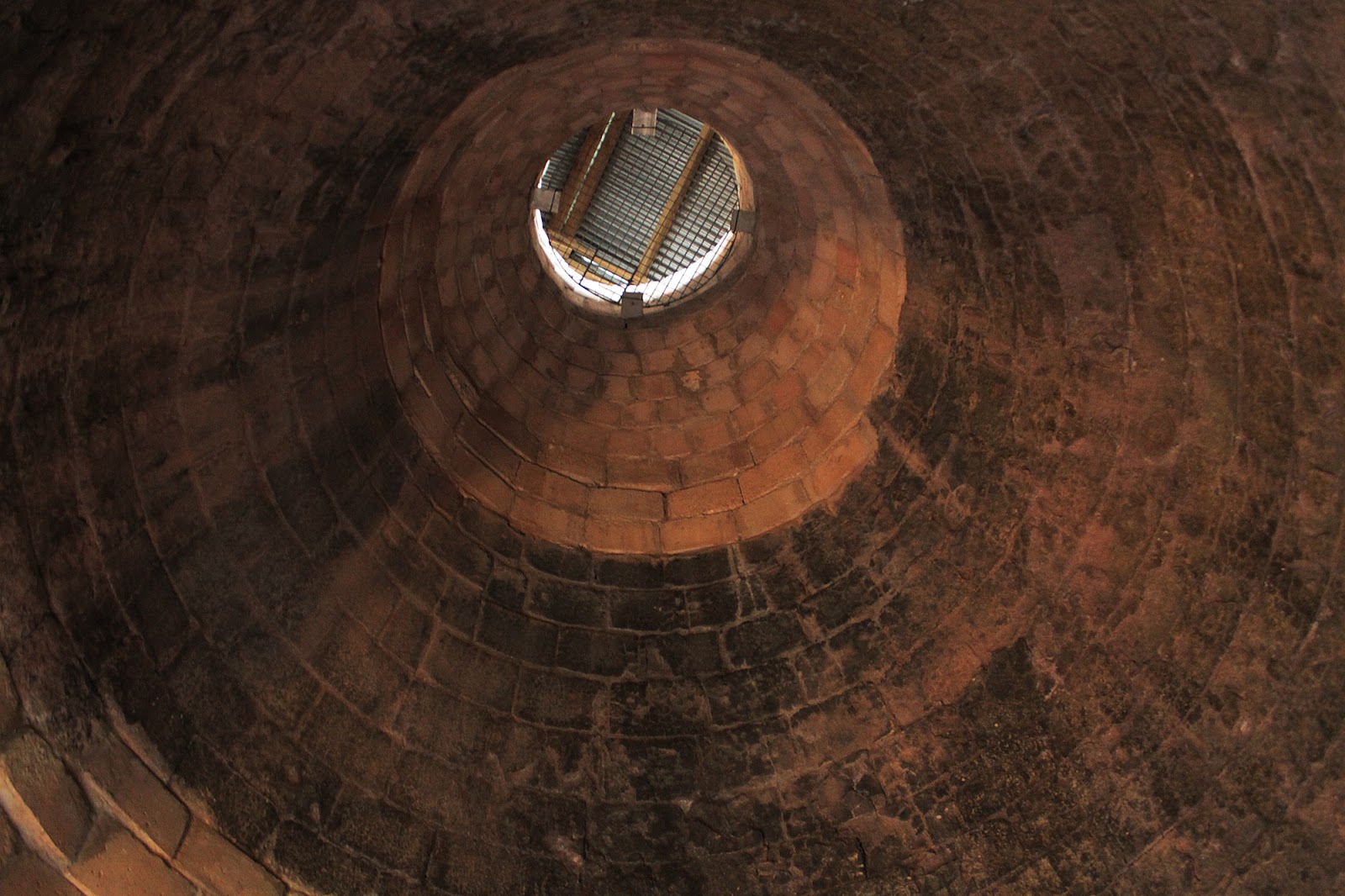
By the mid 1980s much of the site was un-used and quite a state when a selection of people were brought in to make the building safe. Many of these people took great interest in the site and decided, in 1998, to set up a trust to renovate the building, this was the start of the Newland Furnace Trust. Since then they have rebuilt the top of the furnace chamber, excavated the interior of the blowing chamber, re-boarded the floor of the large top room and generally looked after and renovated the site. In the image here you can see the inside of the furnace chamber and the clear line where the new bricks have been added ontop of the old ones. The old being blackened from the many years of charcoal fires raging around them. The work the group have done has been amazing and shows a real love for the furnace and will stand it in good stead to last well into the future.

The site is accessible from the outside and there are a few information boards to help you better under stand the building. On certain occasions the furnace does open on days like the Heritage Open Days for everyone to see inside, speak to members of the trust and learn more about this facinating building, so do keep an eye out!


Do come back on the 22nd when, instead of taking a look at one site, we will be looking at the whole of the Furness area in the Viking Age!

Monday, 31 October 2016

Furness Ghost Stories pt2 - Halloween Special!

In our 2013 Halloween Special we took a look at several spooky tales from the Furness Peninsula, now, three years later, we will take another look into the mysterious side of this beautiful area with even more ghost stories! So turn the lights off and let's get started...

PLUMPTON HALL, nr ULVERSTON


THE PLUMPTON DOBBY

Plumpton Hall just outside of Ulverston is a lovely 17th Century manor house but it is believed that a manor would have been here since the 1500s. With such a long history there are of course some ghost stories surrounding the property. One of the most notable is that of the Haunted Lantern, which I will speak of shortly, but first lets take a look at the spooky, yet sadly defunct, story of the Plumpton Dobby!


The Whitehaven News printed an article in 1899 which told of 'A Genuine Ghost: Caught on Christmas Eve' at Plumpton Hall. The tales of a haunted room had long been know at Plumpton, a room where the horrible sounds of chains clanking, shrieks and groans which would scare even the most hardy of folk. The room was so famous that many were desperate to spend a night in the room. The ghost was said to be so terrifying that the owner of the farm only charged a small rent from the tenant. One year though two servants from a near by farm were walking home on Christmas Eve when they spotted the fabled ghost; white from head to toe with a grinning human skull, groaning loudly. Un-deterred the two pursued the ghost. They followed it through some woodland until suddenly the ghost disappeared. Curious? The two ran forward to where the ghost had been to discover a hole. Inside the hole was a head shaped turnip lantern with a candle with in it, chains and a white sheet with, not so surprisingly, the farmer of Plumpton Hall wrapped up inside it. After all that the Plumpton Dobby was in fact the farmer trying to, no doubt, make a bob or two by creating a terrifying ghost!


THE HAUNTED LANTERN OF PLUMPTON HALL

Another interesting tale from Plumpton is that the hall possesses a haunted brass lamp which will always find its way home should it be removed from the building.

The brass lamp was said to have washed up on shore from the wreck of a ship from the Spanish Armada (although experts have now said that it is much more recent in date). For many a year the lantern has hung in the hall and often lit to help guide travellers across the sands. It has also been the centre of some mystical behaviour and if ever it is removed from the hall it always finds its way home and is discovered hanging back in it's rightful place, even when extreme lengths are gone to to remove it; like the time it was sealed inside a barrel and thrown out to sea.

Who knows what is going on with the lamp and why it is so determined to remain in the hall! Is it paranormal or is it just a fanciful tale? I'll let you be the judge of that.


DALTON-IN-FURNESS


A SINISTER SOUND INSIDE THE OLD POLICE STATION

Many years ago now myself, my brother and some friends had the opportunity to stay the night in the Old Police Station and Courthouse in Dalton. At the time the site was being renovated into a cafe and apartments and the place was, especially at night, quite spooky!


We were set to sleep in a small room to the front of the building but during the night we went for a wander around in the pitch black. Eventually we ventured into the Police Inspectors house, which is attached to the station, and were situated in a large room on the first floor. Whilst in the room some loud and strange noises started to emanate from the floor above us. Prolonged scraping noises were clear to hear, it sounded like someone dragging heavy furniture across the floor, or something more sinister. All in the room were, quite reasonably, scared and panicked about this. We were the only ones in the building at the time, what on earth could be making this sound!? It carried on for a while until seeming to stop. We built up some courage and, slowly, moved up the stairs to the room which the noise had come from.

As we entered we were met with a large empty room. No one was in there, nothing was there which would obviously explain the sound and everything was a little eerie. To this day we don't know what caused that strange and scary sound. All we do know though is that when the station was still in use the wife of one of the Police Inspectors had tragically fallen on a set of stairs while taking food to the prisoners. This fall killed the woman and some may say that her spirit still haunts the station. As we were in what was once her house who's to say that the noise we heard wasn't from her long dead spirit?


FURNESS ABBEY / ABBOTS WOOD


A RECENT, MYSTERIOUS, SIGHTING OF A MONK

It was the 14th of September 2014 when two women were walking near the abbey, they stopped for a moment to enjoy a view across the ancient ruins towards the abbot's house when they noticed something a little strange. There was some movement in the woodland behind the abbot's house, they looked closely and there was a hooded figure, "Oh god, it's a monk!" one of the ladies gasps. The figure wore white robes with a black scapula and hood, the typical look of a Cistercian monk. The figure stood for a moment before walking a little to the right and stopping again, it looked out over the abbey before moveing away into the bushes.


The ladies weren't to worried at this point as they thought it was probably one of the Iron Shepherds, a local living history group, but they still decided to go and have a look where they had seen the hooded vision. They rushed up the hill and into the woods. When they arrived there was nothing,, no sign of anyone, the woods was eerily empty save two ladies with toddlers on the road ahead. Slightly puzzled they went in search of the Iron Shepherds but they were nowhere to be found, and as they later found out hadn't even been in the area that day.

The ladies went to see where the figure had been, as they arrive though they start to feel cold and the hairs stand up on the back of their necks, nothing was around. They decided to leave a tissue on the fence where they had seen the monk and wandered back down to the roadside where they had originially been stood. As they looked up once again they are met with a completely different scene, the whole area looks different from before as if they had been looking at a completely different place or, indeed, time!

To this day the ladies do not know what they witnessed that afternoon but it certainly is something that will remain with them always.


A 1930's BOY MEETS A MONK

In the Autumn of 1934 a young butchers boy was cycling through Abbots Wood towards the road having made a delivery. Suddenly he heard a strange noise and the temperature dramatically dropped. He skidded, came to a halt and hopped off his bike. Looking up the boy was confronted with a mysterious figure, a figure in long robes, a monk! Petrified he scrambled back onto his bike and raced off down the hill to get away.

The boy maintained this story for the rest of his life until his passing at the age of 81. The incident must have been truly terrifying!


THE FURNESS FELLS


THE CLAIFE CRIER

This tale is from a little further up into the Furness Fells at Claife Heights on the west side of Windermere but relates to the monastic site of Furness.

Many years ago now a ferryman, quite new to the job, was shored up on the east side of Windermere at Ferry Nab awaiting passengers to take over the mere. It was a dark and stormey night with not many people to aid when cries from across the lake started to echo over the water; "Boat! Boat!". The ferry man was quick to head out, if slightly reluctant, and rowed off over the water to the west. He was gone for sometime. Awaiting passengers started to gather on the east shore when the ferry man returned. All awaiting were surprised to see that he had no passengers. When he finally made it back to shore the ferry man was so terrified he couldn't speak and had gone mad. He could not say what had happened whilst he was at Claife but the incident must have frightened him so as a few days later he passed away.

Following this faitful night more cries of "Boat! Boat!" were heard but no ferryman was brave enough or foolish enough to listen and all stayed moored on the east. Eventually the cries got to much and were loosing the ferrymen business so a monk from Lady Holme Island was called to exorcise whatever spirit lay to the west. The monk duely responded and performed an exorcism, he banished the Claife Crier, as the spirit had become known, to a quarry in the area, now known as Claife Crier Quarry, ‘until men should walk dryshod across the lake’.

The Crier is believed to be that of a Monk from Furness Abbey who's job was to save the souls of deborched women in the area. He fell for one of his clients, a lady of Claife, and one day followed her back to her home at the heights, she then regected him. The monk was so distraught that he cried and wailed until eventually dropping dead. His spirit then lingered and continued to cry out eventually calling out for "Boat! Boat!".

Although apparently exorcised the Claife Crier is still said to be roaming the heights and has often been heard crying out across the lake to this day as the night draws in...


I hope you have enjoyed this spooky special and haven't been too scared. If you want to read some more ghostly stories from Furness then do take a look at our 2013 Halloween Special and until next time, sleep well!

Tuesday, 5 July 2016

A Hidden Manor House and Medieval Tower, Broughton Tower | Life in the Past Series


Set back from the village of Broughton-in-Furness, hidden by trees, stands the interesting and suitably impressive Broughton Tower.


Currently private flats Broughton Tower started life as a 14th Century pele tower, much like those found in towns like Dalton-in-Furness. The tower, much like many others, was erected to defend against the ever growing possibility of Scottish attacks. Something that was a common threat at this time as the Scots were performing constant raids on England. In the picture above you can see the original pele tower, with its typical crenelated Medieval style, in the centre of the large complex of buildings.

Much like the castle at Dalton the tower was most likely used as a manorial court, a place where local disputes and wrong doings could be brought in front of the monorail lord and brought to a conclusion. The tower even as a dungeon which could be used to hold wrong doers before further punishment.

The tower was constructed by the Broughton family, Lords of the Manor of Broughton. They stayed in the town until 1487 when Sir Thomas Broughton was killed in the battle of Stoke. Thomas had allied himself with Lambert Simnel and fought against the Kings men for him. On his death his seat at Broughton was seized by the crown and given to the 1st Earl of Derby.

Some hundred and seventy years later the 7th Earl of Derby was executed for his allegiance to Charles II. It was then, in 1658, that the tower and the seat was passed to the Sawrey family. They kept ownership of the tower until the 1920s. The Sawreys, during the 18th Century, turned the tower into a manor house. A grand extension was added to the original 14th Century tower creating a much larger and impressive structure, the structure we can see today.


The whole site was turned into flats in recent times, which are now in private ownership. This means that the historic site is off limits for any visitors but you can walk along a public footpath through a nearby field and be rewarded with great views of the structure, including the original 14th Century tower.

The manor house and original tower are a real piece of hidden heritage, tucked away out of sight behind the small town of Broughton, and is a real treat to stumble across!